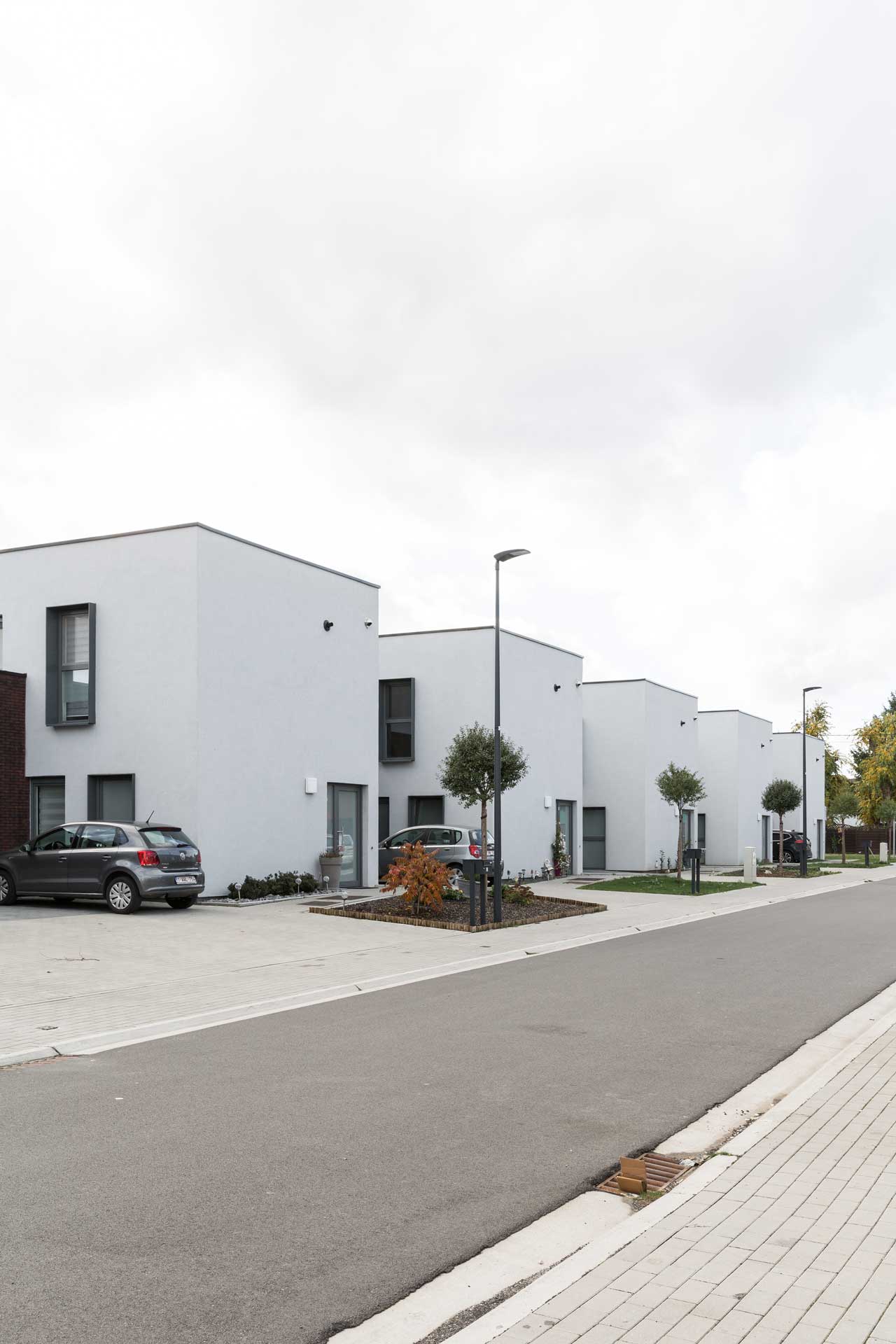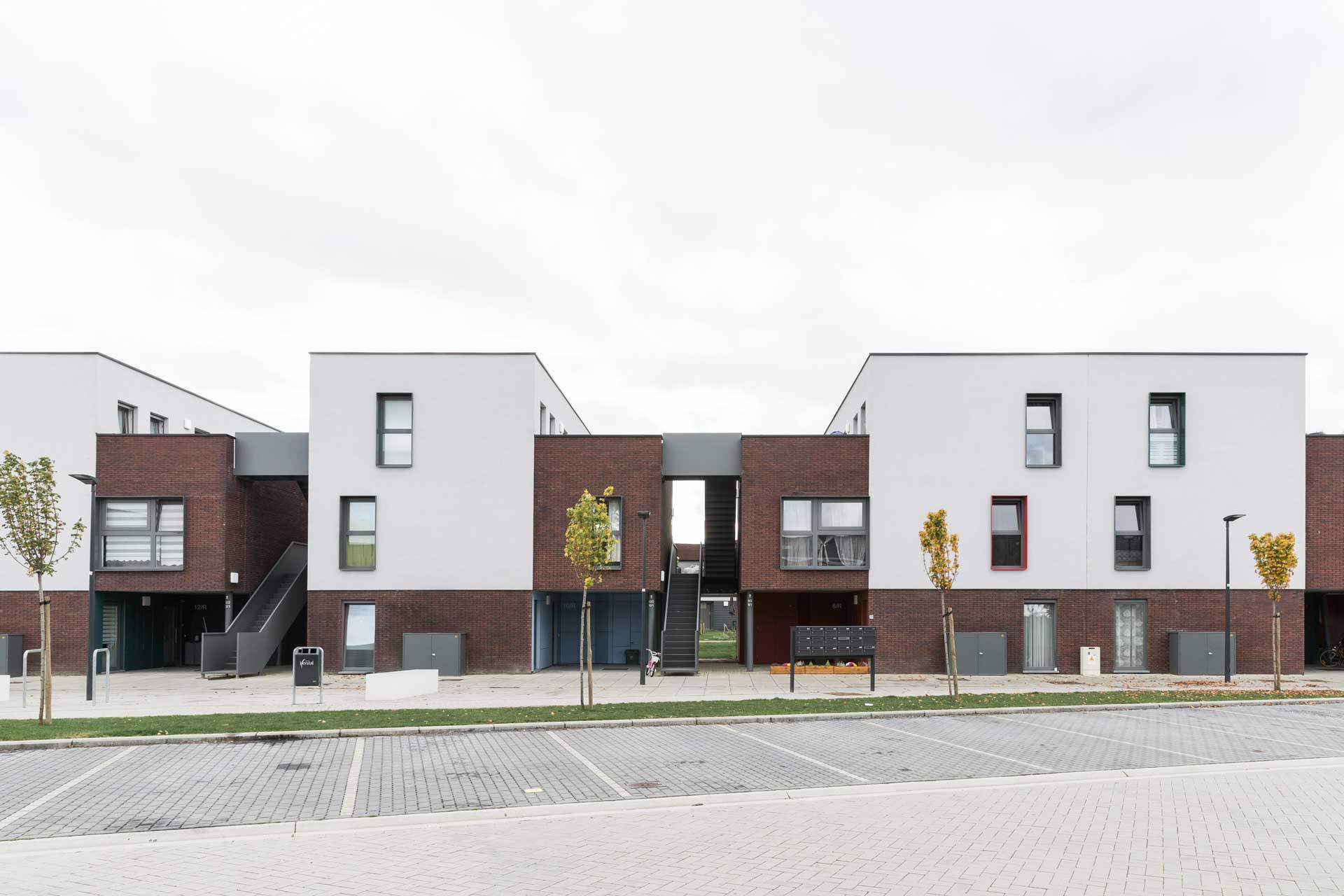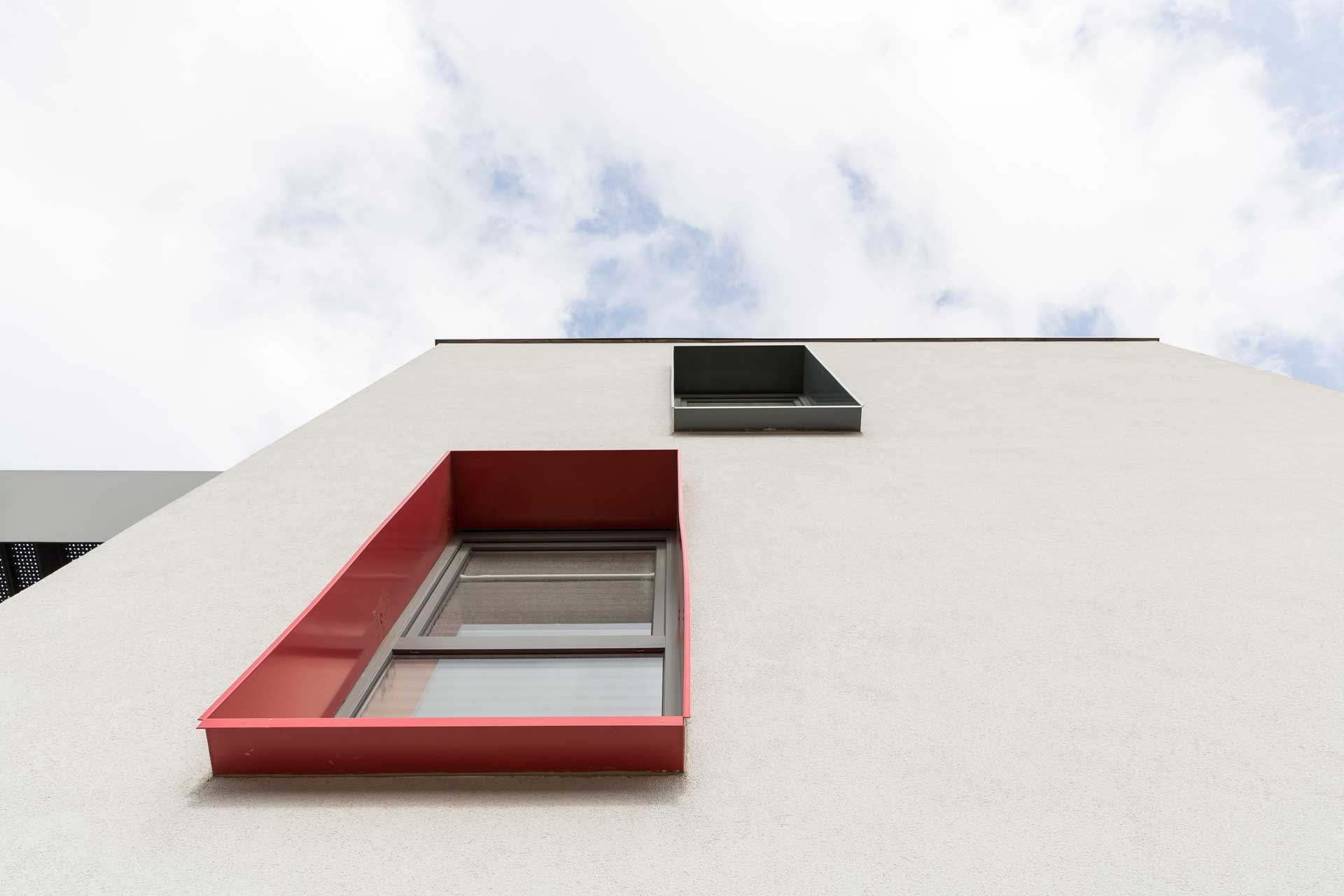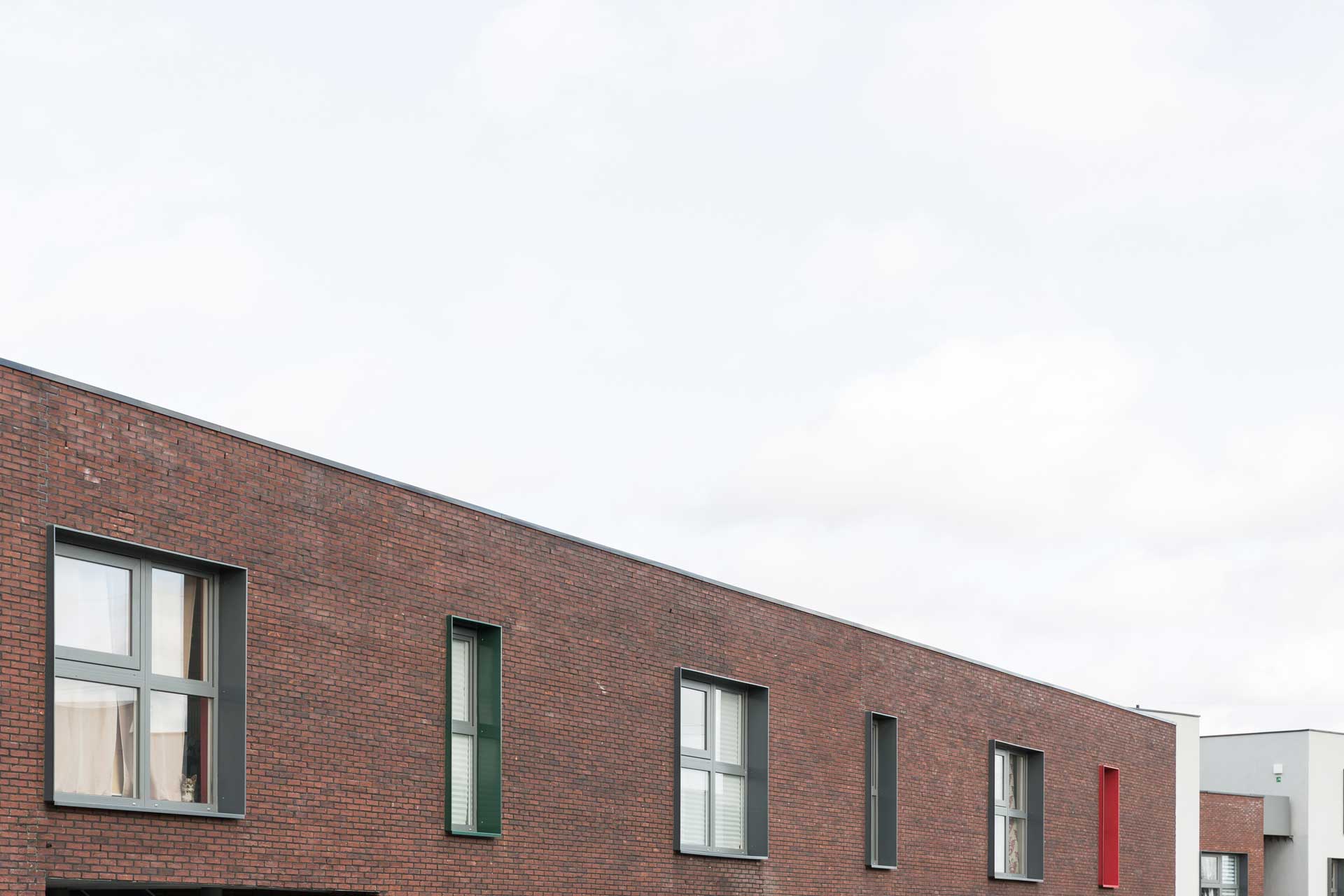
Creation of 60 sustainable public housing units, including the development of roads and surrounding areas.
In accordance with the wishes of the project owner, at least 30% of the housing units are adaptable for persons with reduced mobility.
Considering the relatively large size of the site and the demand for a variety of adaptable units, the office sought a new housing typology and building volume that reconciles the existing semi-rural environment with current densification needs. The new units are organized around five entities. Two of them have a ground + 2 floors layout, while the other three, with a more modest scale, have a ground + 1 floor layout.
Set slightly back from the access roads, the entities nonetheless integrate seamlessly into the site and improve accessibility for less able-bodied individuals, notably through adapted circulation paths and parking spaces.
As a result of the recessed placement of the housing units, the outdoor spaces created along the street frontage can be used for pedestrian circulation, parking, or green areas. Access to the units is also secured.
Photo credit: Nicolas Da Silva Lucas