Challenge
Returning the Meuse to the residents of Visé
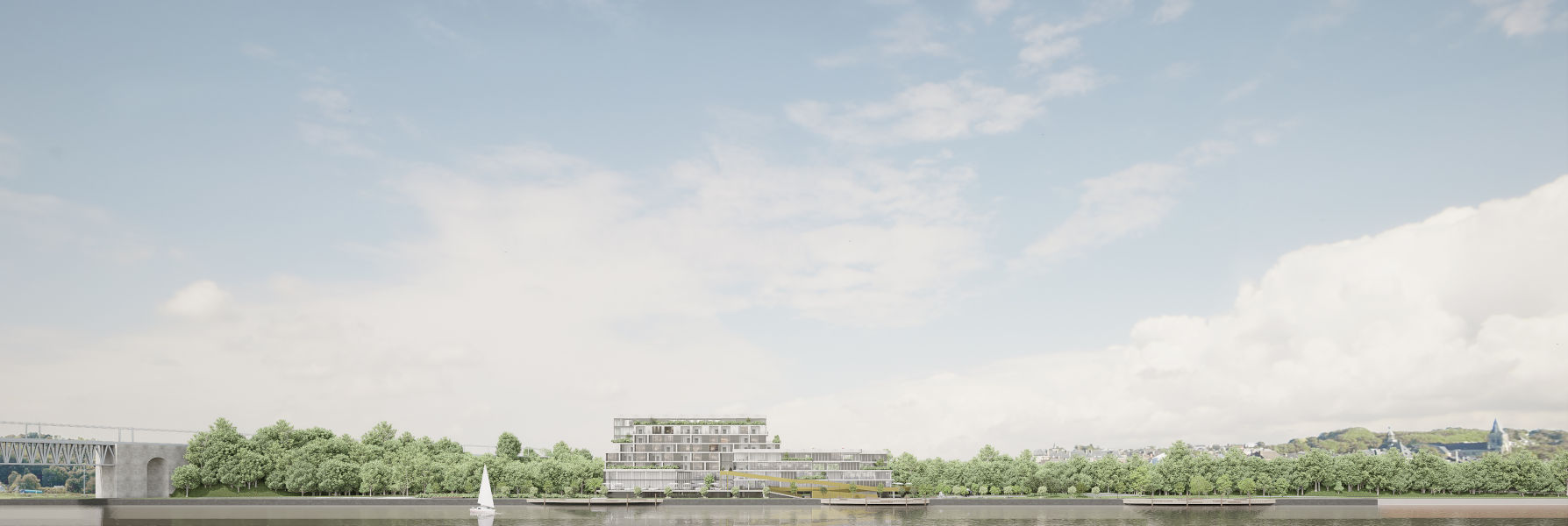
On the banks of the Meuse, the City of Visé acquired a vacant plot from the Walloon Region with the aim of creating, on the one hand, a public park to bring the residents of Visé back into contact with the Meuse, and on the other hand, a tertiary development to revitalize local tourism.
The City of Visé therefore launched a public tender seeking a project that would combine these two objectives, while taking into account the location and specific characteristics of the site.
Context
In the heart of the Meuse basin
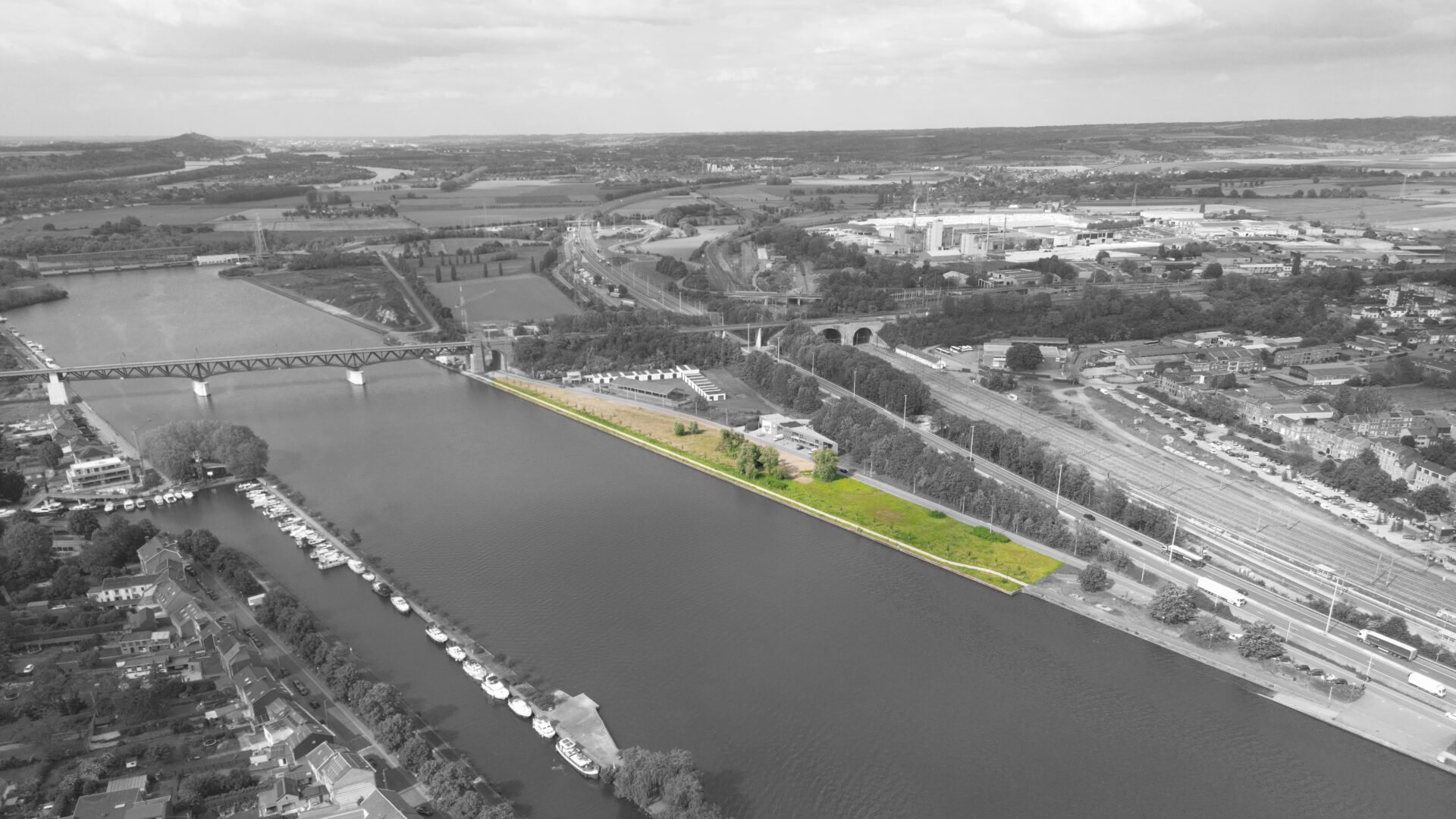
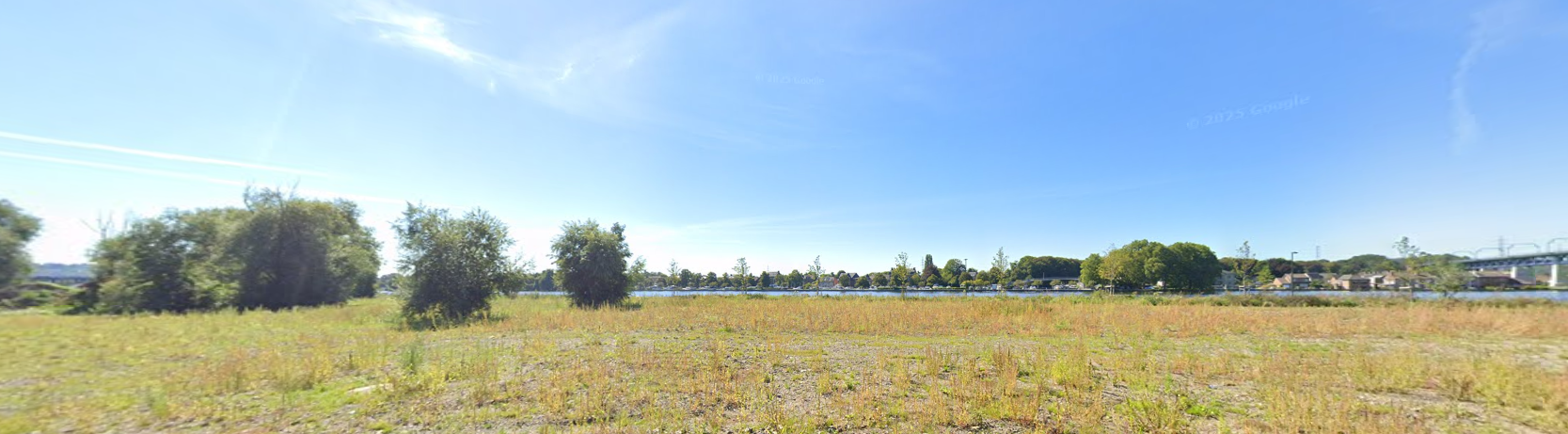
Located in the center of the municipality of Visé, the site is situated within a rich and diverse landscape, in immediate proximity to the Dutch and German borders. It is currently an overgrown wasteland.
The plot in question is approximately 1.5 hectares, and its main characteristic is its narrowness. It is bordered to the southwest by the Meuse and is in immediate proximity to major road networks and Visé train station.
It is therefore a prime location for all residents of Visé due to its pedestrian and vehicular communication routes.
Solution
Visé Connection
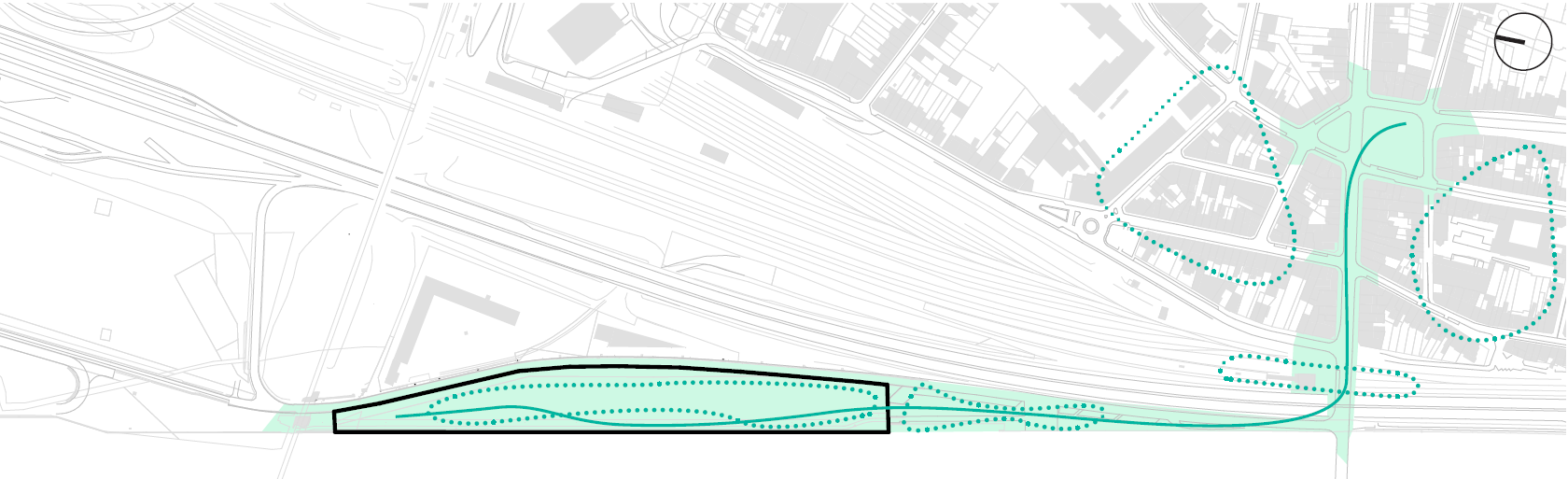
From the outset, we chose to integrate the heart of the City of Visé into our considerations. Indeed, it was essential for us to integrate not only the City but also all its functions into the project’s conceptualization.
This expansion of the perimeter allows the project, located on the banks of the Meuse, to be positioned as an integral part of the Visé landscape and proposes highlighting its connection with the city.
A clearly defined common thread
Once the area was expanded and defined, we established a common thread to ensure continuity between the site and the heart of Visé. It serves as a connection between various functions already present in the city center and along the proposed route (train station, existing quay developments, etc.).
Furthermore, we envisioned punctual or linear interventions that would ensure direct connections to the existing context throughout the studied area. This axis would be enhanced, offering residents of Visé safe and peaceful access to the Meuse while bringing the studied site closer to soft mobility options such as the train.
The objective is the controlled evolution of Visé’s urban and landscape fabric, while presenting a site evolution through unique new functionalities aimed at strengthening the attractiveness of the studied area.
A prime public space
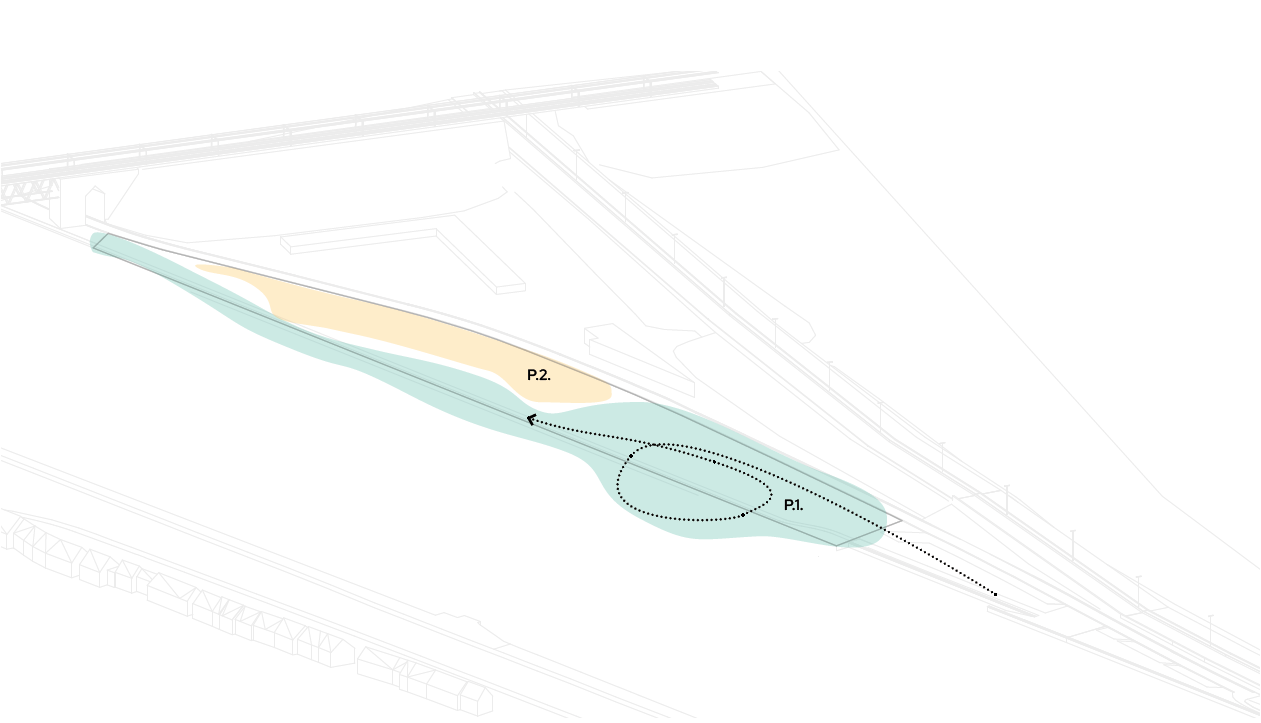
Let us now turn to the core of the project and the primary objective of the City of Visé: to successfully integrate a private-oriented zone (P.2 in the diagram below) and a public one (P.1 in the same diagram).
As mentioned previously, the common thread running through the entire site directs the public to all offered activities and ensures the establishment of a permanent and fluid flow across the plot.
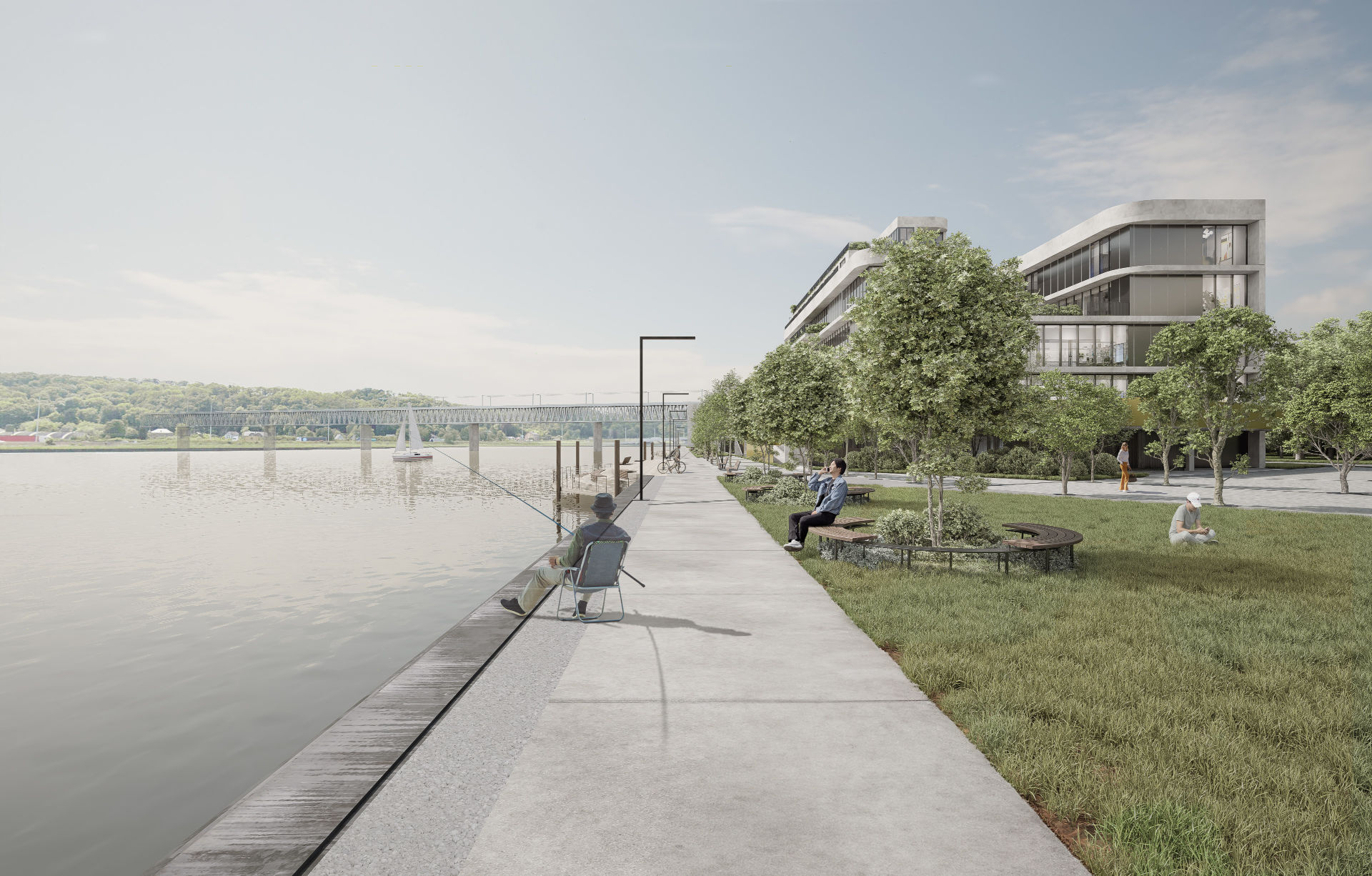
Thus, the public hub extends along the entire length of the plot to ensure the most complete accessibility to the site and facing the Meuse. Furthermore, this same hub offers a prime and privileged space at the beginning of the plot.
Moreover, this space is directly integrated with the existing and future developments on the Visé site, thus becoming the centerpiece of the public space design in our project.
A structure defined by verticality and linearity
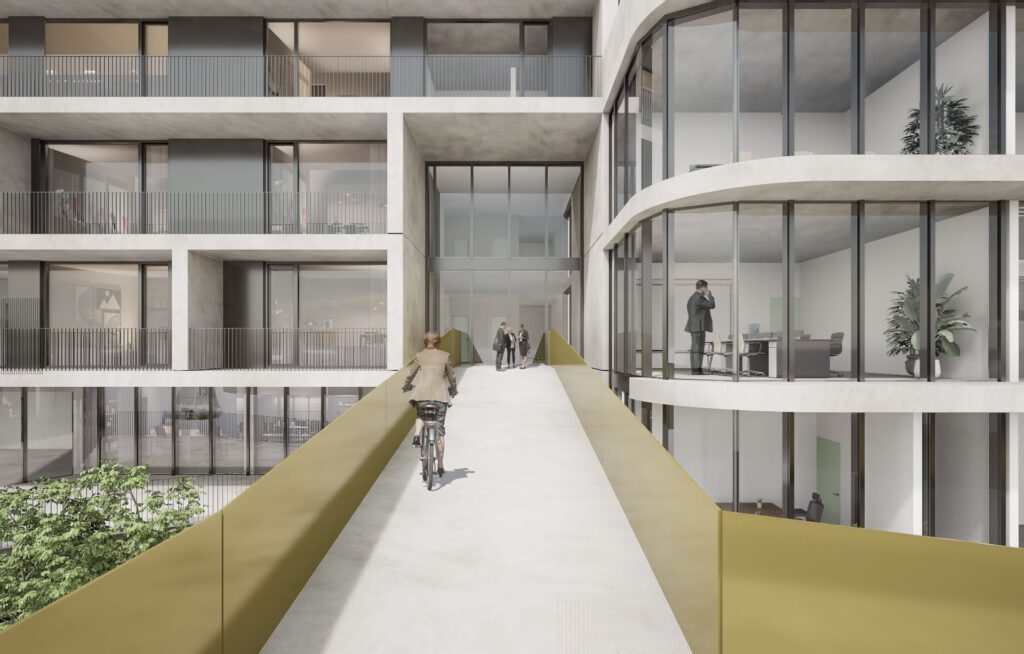
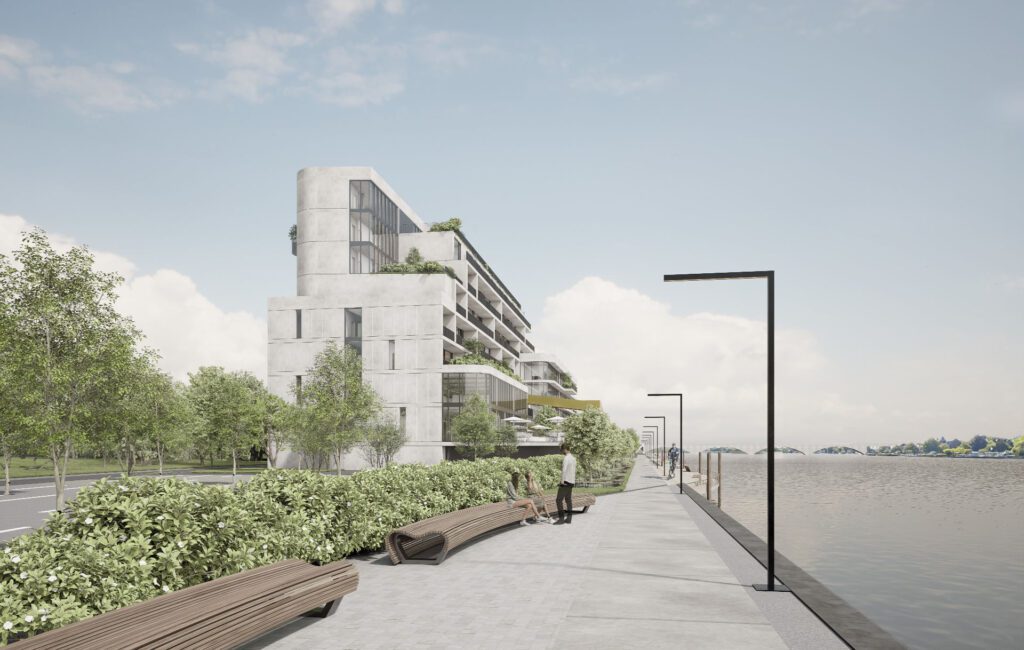
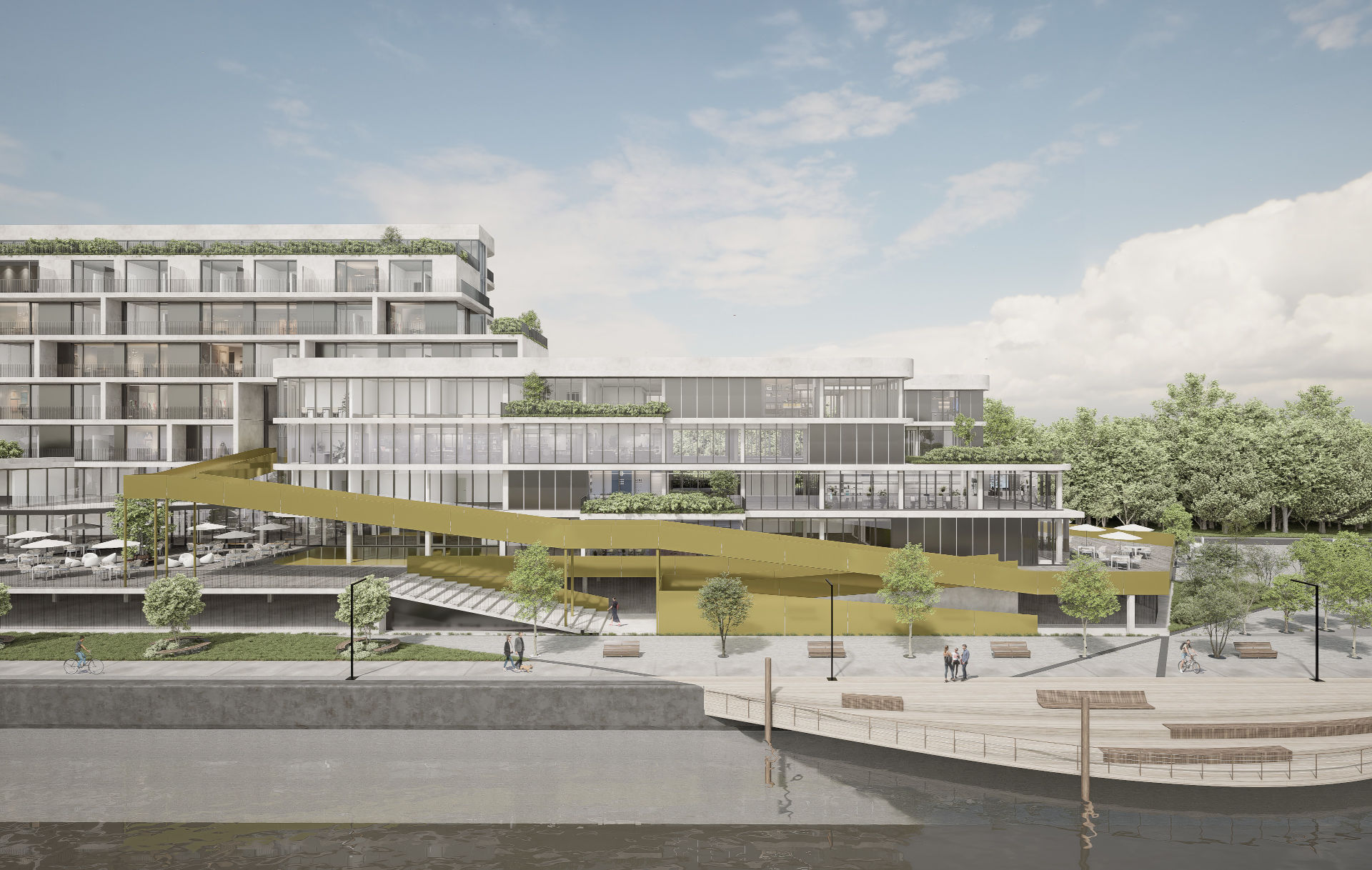
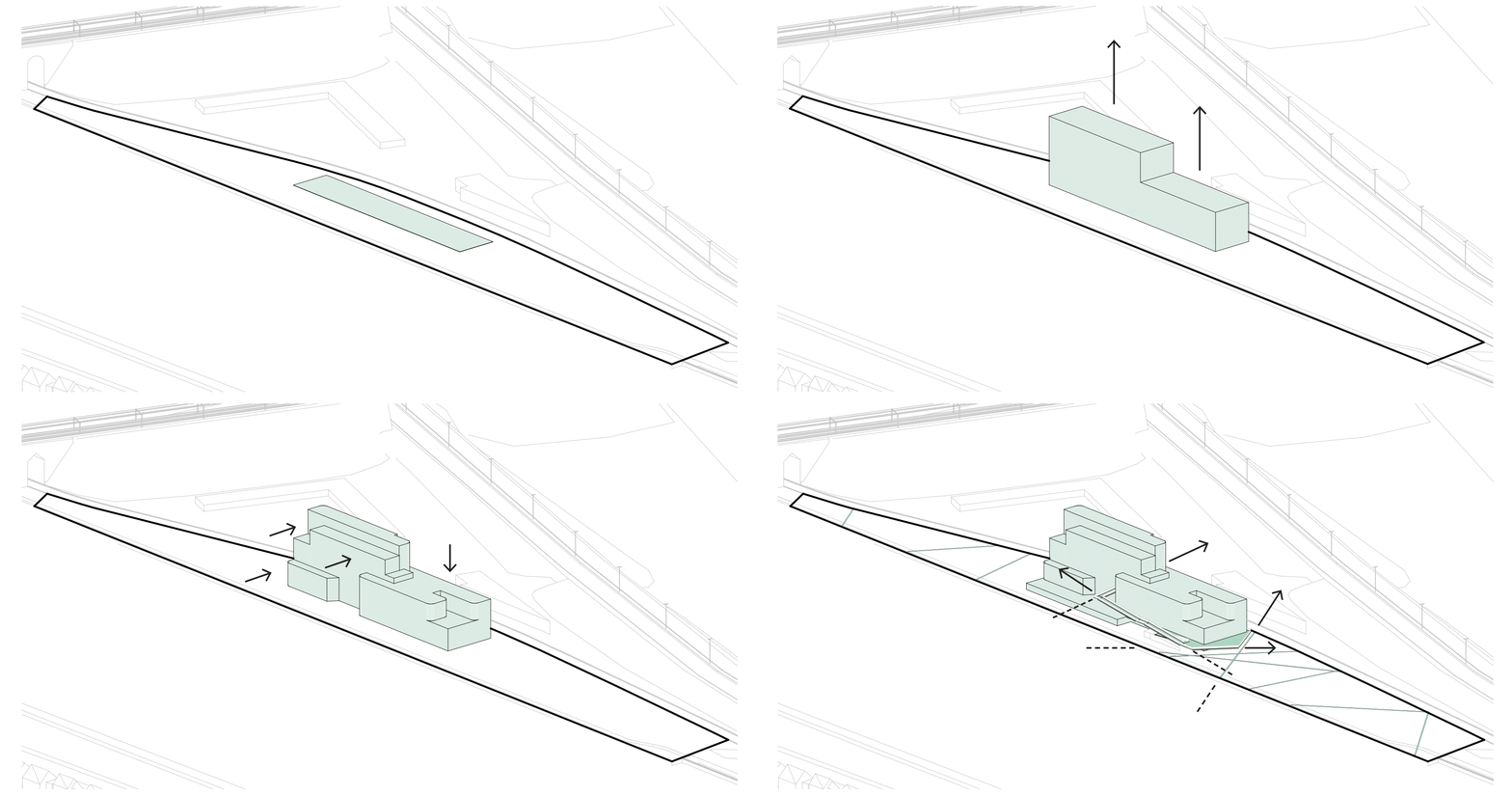
For the private space, we designed a mixed-use building comprising a “bikeable” hotel (specially equipped for cyclists) with approximately one hundred rooms, offices (coworking), and spaces dedicated to hospitality (Horeca).
Due to the narrowness of the plot, the spatial development of the building was primarily conceived lengthwise, without sacrificing a certain width that would foster quality spaces.
Finally, the project integrates the guidelines for urban and landscape development through the creation of ramps articulating around and within the building.
These ramps provide external connection to the building and lead directly to the heart of the built project.
High-quality surroundings
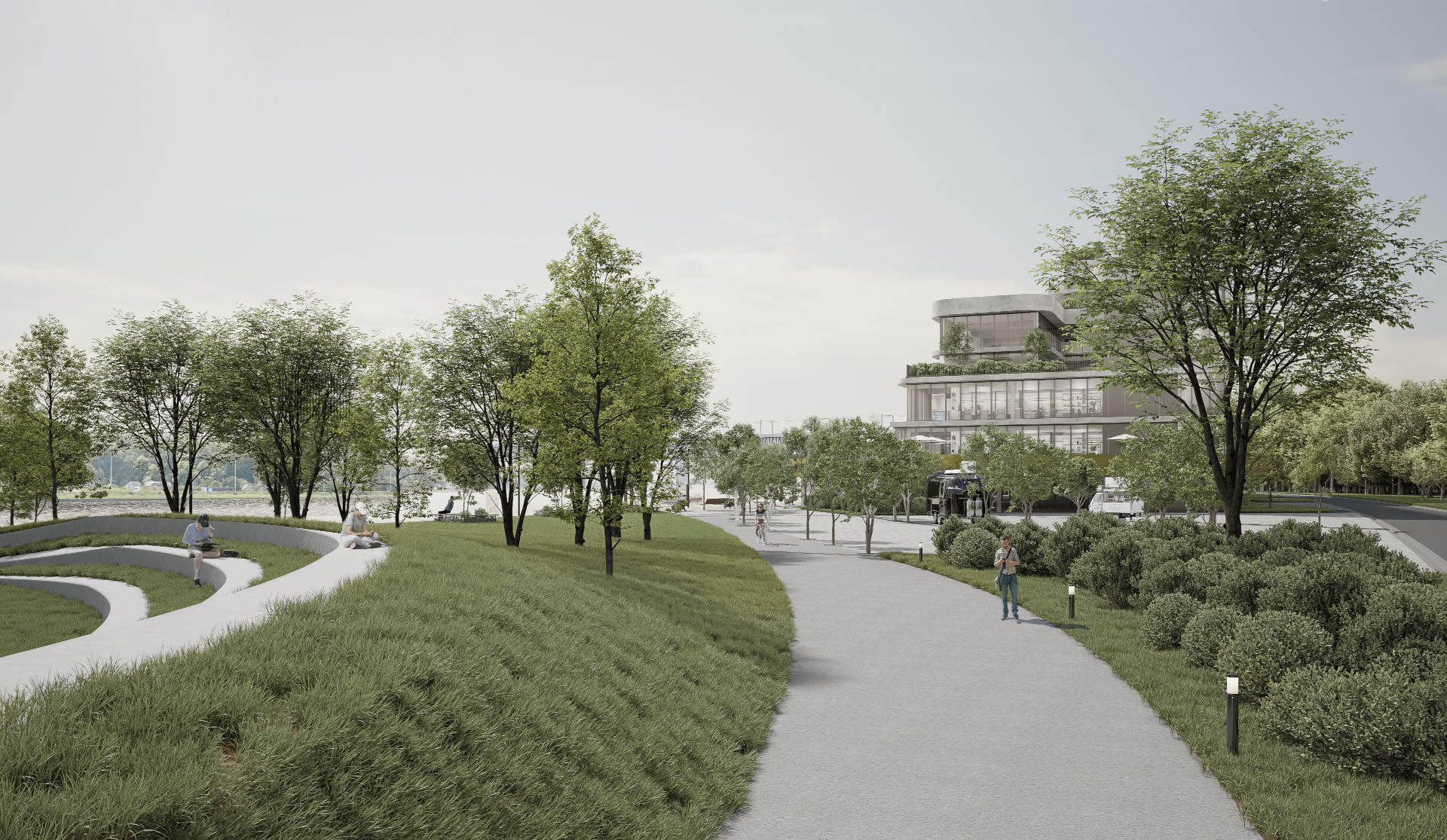
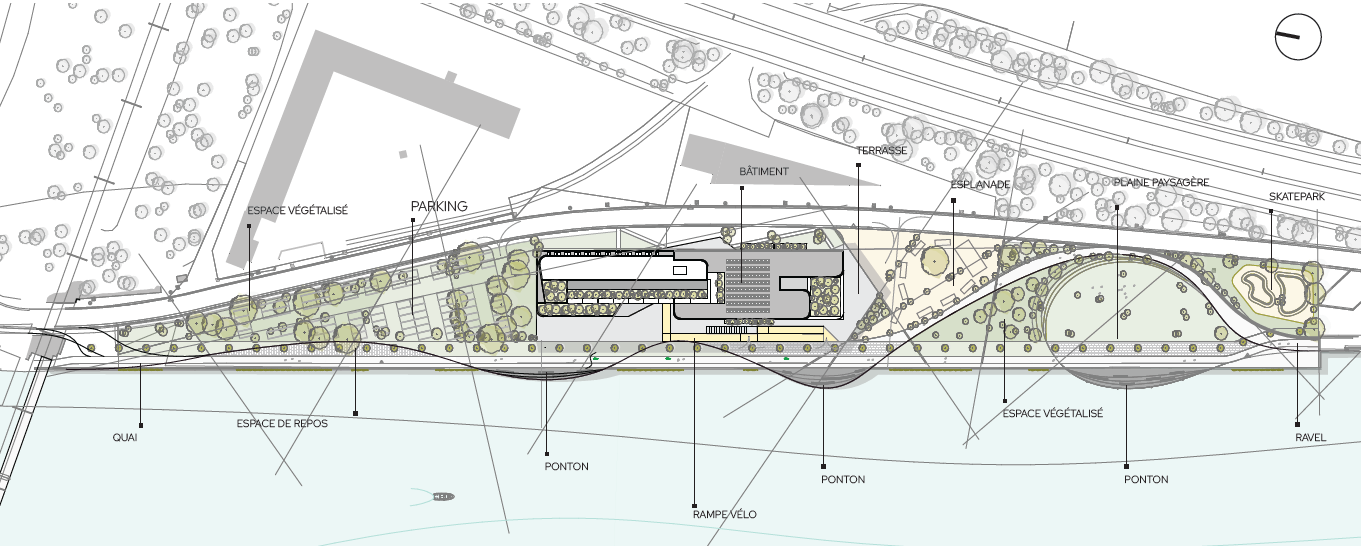
Our project does not stop there, as we have also planned to create various publicly accessible zones such as rest areas, meeting points, and play areas. These will be located facing the Meuse and at the beginning of the plot to ensure continuity between the river and Visé.
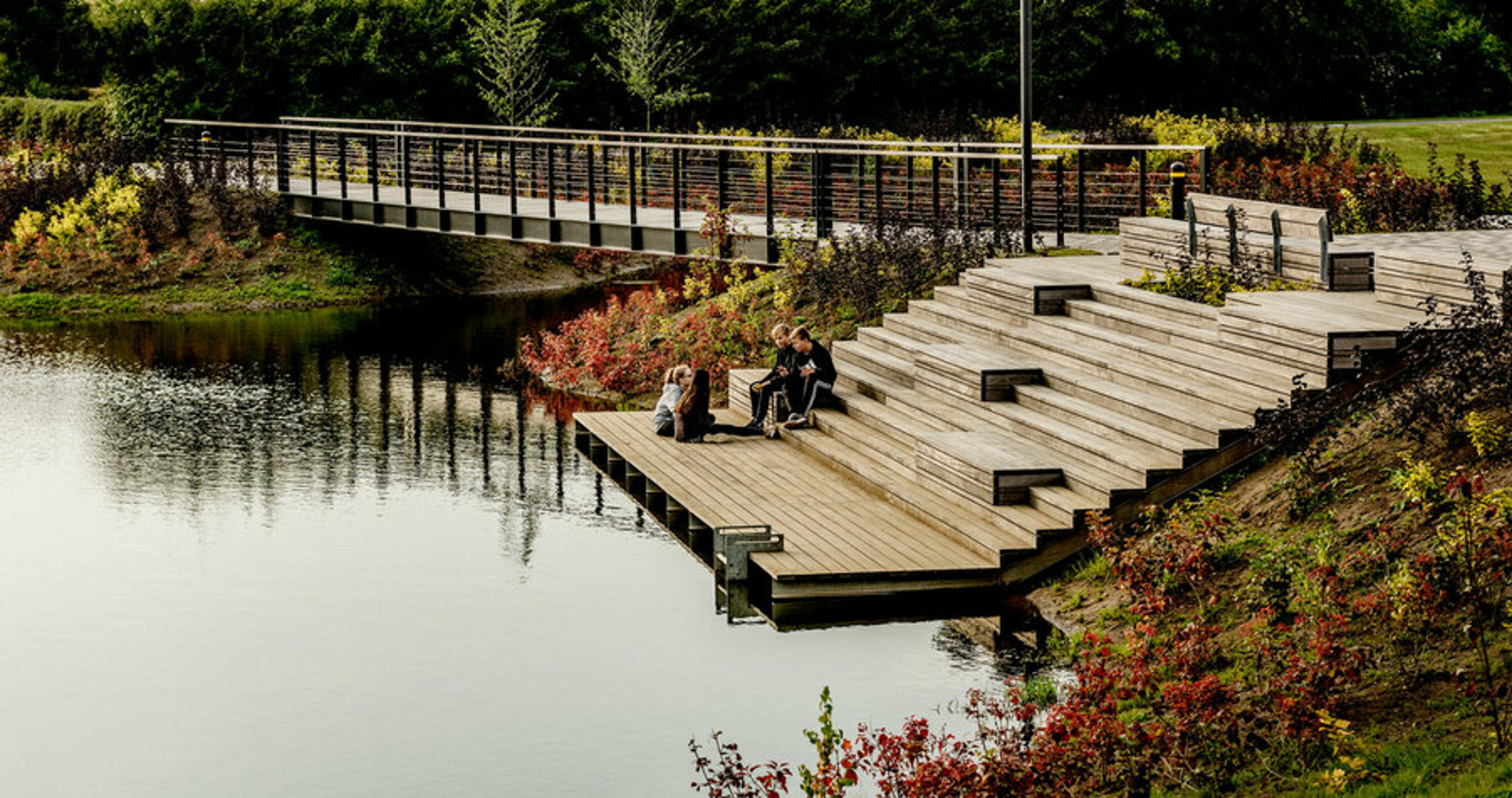
Among the various developments, there is notably an esplanade, tree-lined pedestrian areas, a skate park, pontoons, and a landscaped plain.
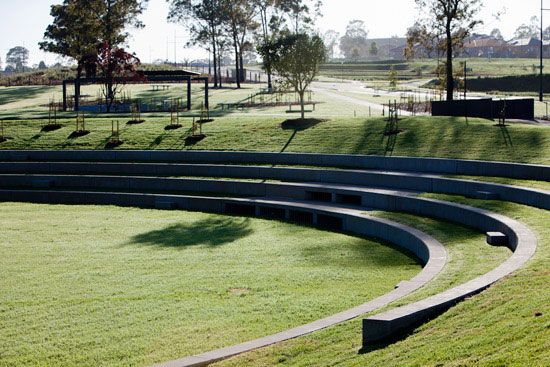
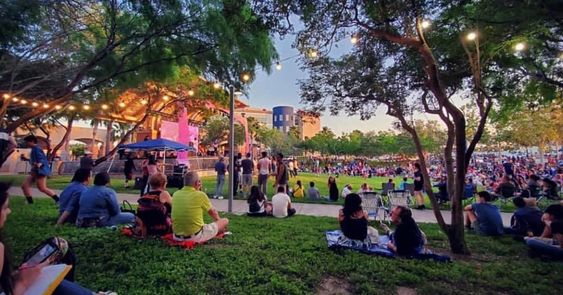
A true central element of the surroundings, this plain aims to be a gathering place, while developing within a natural space and remaining close to various amenities. The space is complemented by landscaped bleachers that will occasionally host events, as well as an extension over the Meuse offering a unique experience.
Result
An innovative and sustainable ecosystem
By combining a large public space, a multifunctional private space, and soft mobility solutions on the same plot, we fully address the challenge of this project.
Through a macro and micro analysis that places human well-being at the center of our landscape and urban planning considerations, we have succeeded in creating an innovative and sustainable ecosystem in Visé.
A final result that strengthens Visé’s tourist and entrepreneurial attractiveness, while creating a privileged space on the banks of the Meuse that the residents of Visé will be able to appropriate.