Challenge
Significant energy poverty
The energy renovation of social housing in Wallonia represents a crucial challenge for several reasons, encompassing social, economic, and environmental dimensions.
The Region faces particular challenges regarding energy poverty, the aging of social housing infrastructure, and ecological transition.
Renovate for longevity
The Grâce-Hollogne Housing Company launched a public tender to carry out the energy-efficient renovation of 84 housing units in the Cité du Flot.
The aim of this procedure was to improve the living conditions of the occupants of these housing units, while minimizing disruption to them during the works.
Context
A distinctive identity
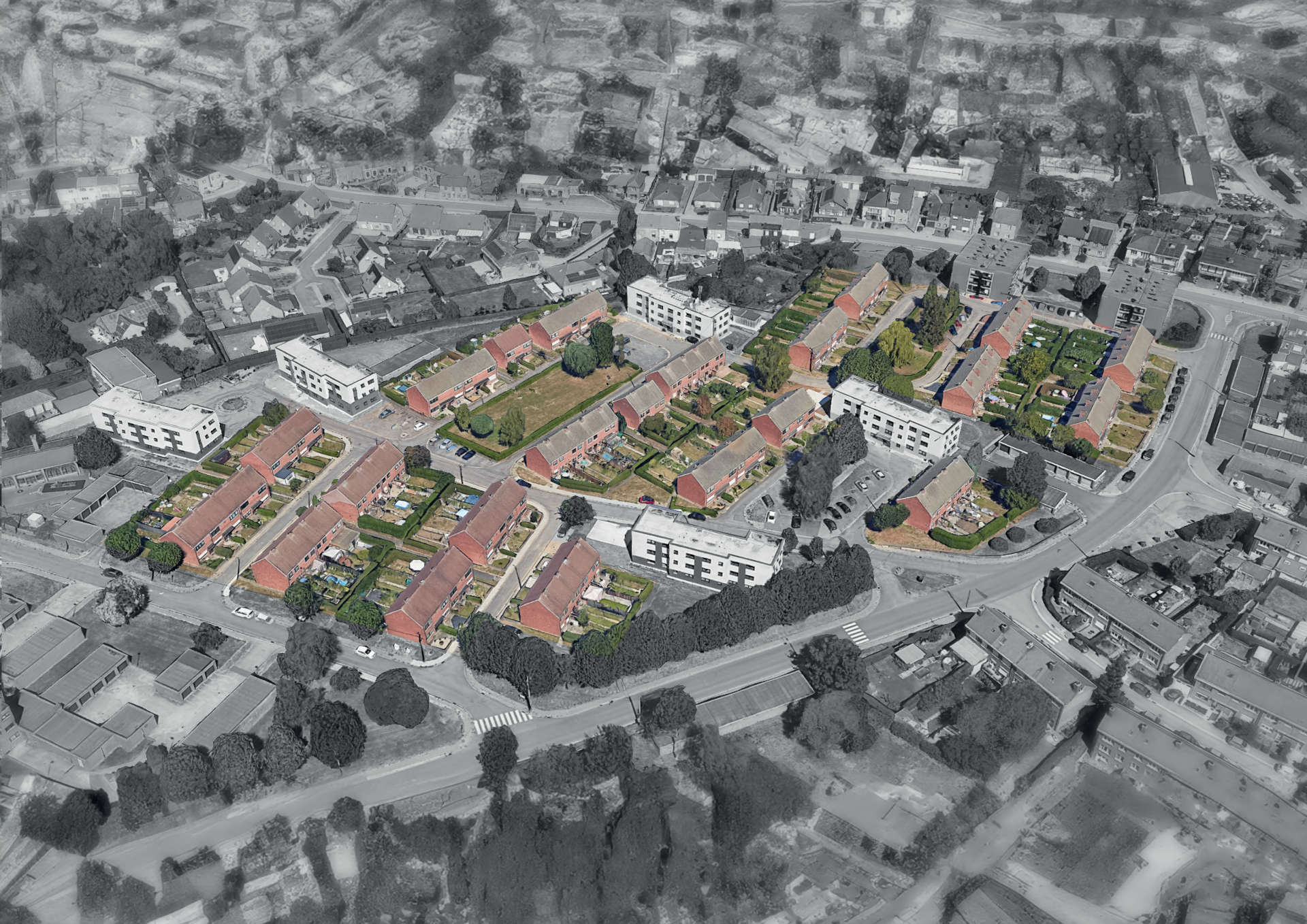
Located on the heights of Liège, Grâce-Hollogne benefits from an interesting location within greater Liège. Its urbanization primarily consists of terraced houses and industrial areas.
The neighborhood of interest here features traditional building forms, aligned in a rectilinear fashion, with small open front courtyards and a garden area at the rear.
Despite some unique characteristics, the entire set of housing units to be renovated represents a cohesive unit within the neighborhood.
Traditional brickwork
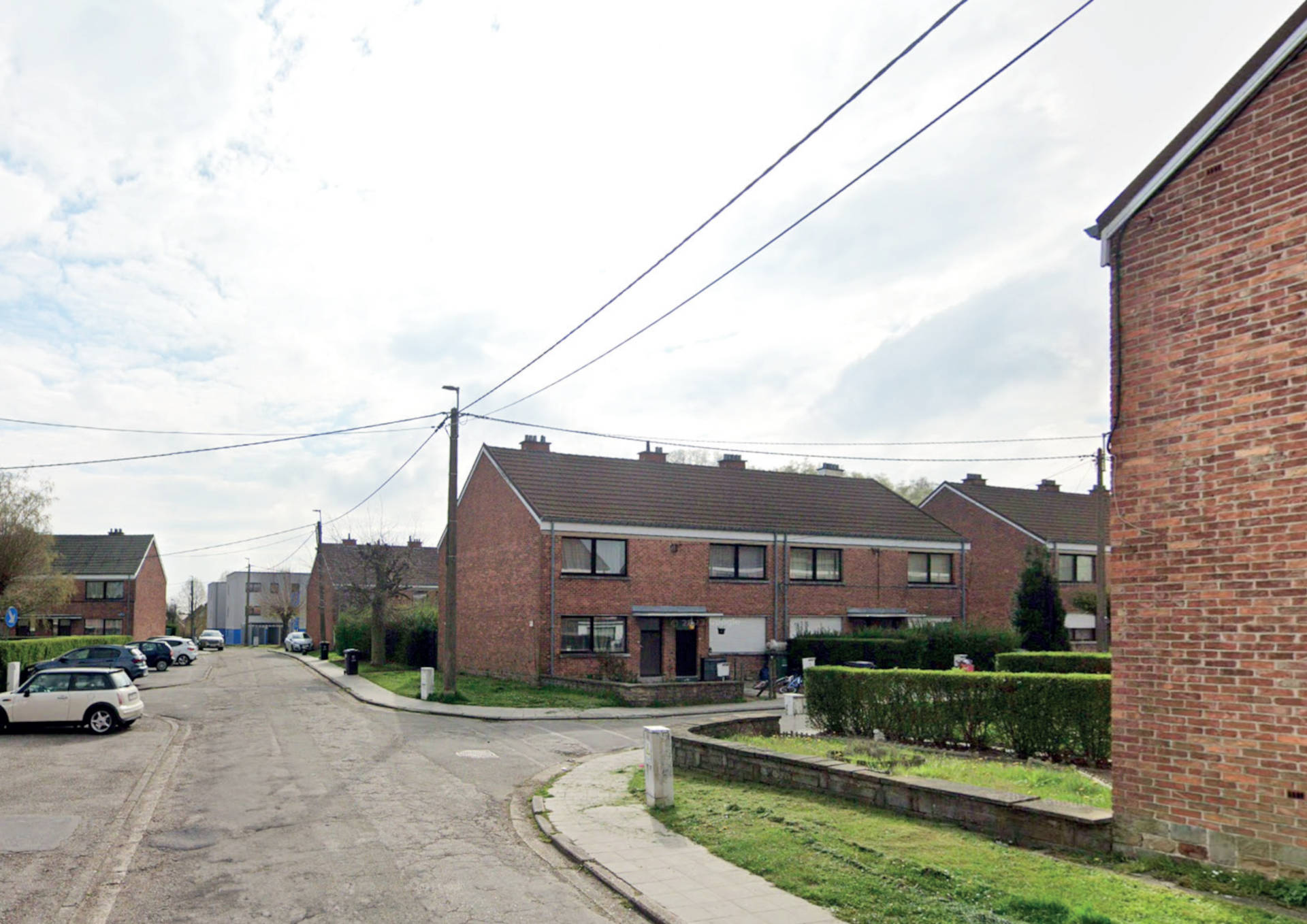
The housing units are generally grouped in fours, offering linear elements where the facade details are similar for each unit. This detail provides coherence to the built ensemble.
The color tones are typical of the region due to the use of traditional local red brick and tiled roof coverings.
Solution
A prefabricated second skin
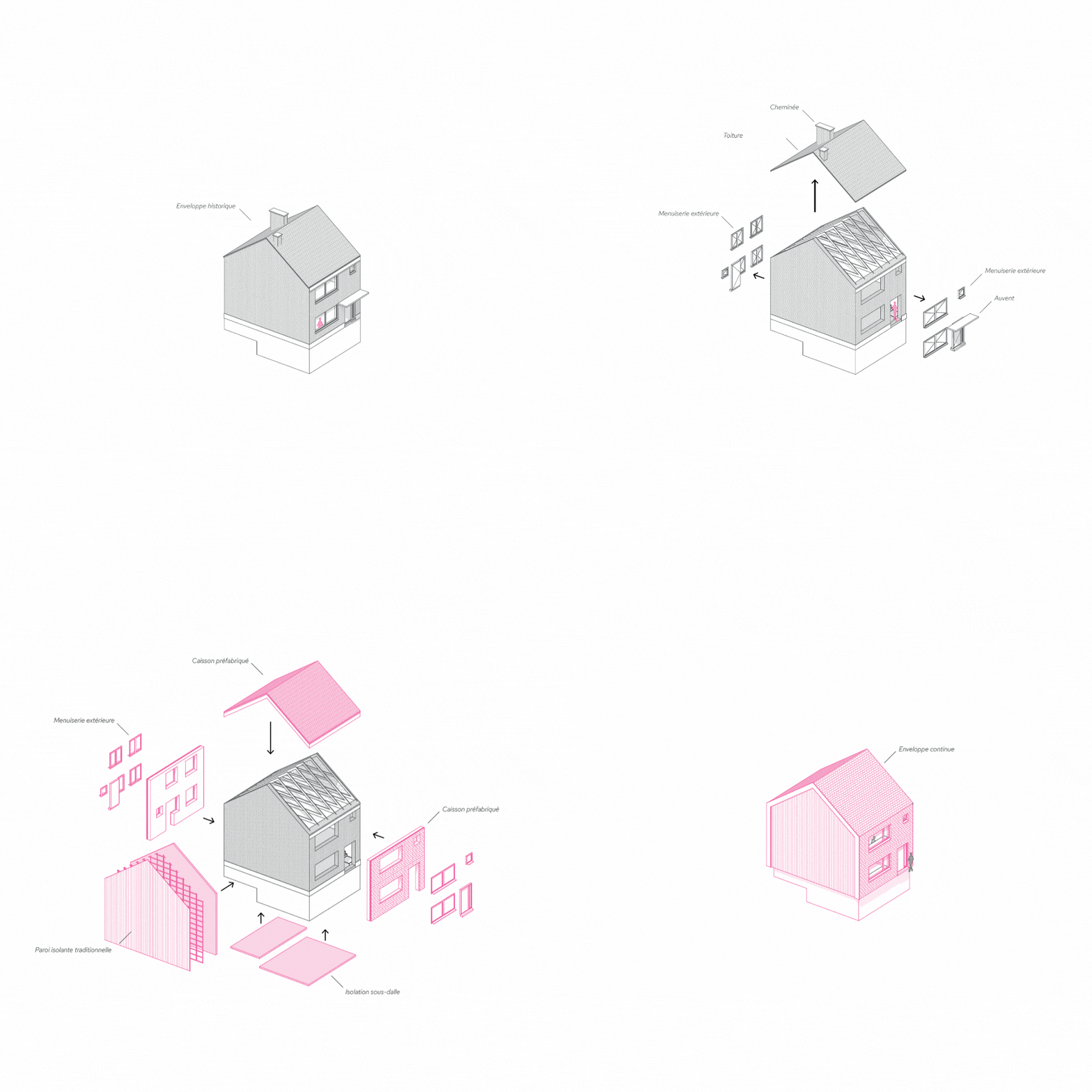
Our approach emphasizes prefabrication to optimize costs, timelines, and construction quality. By using durable and low-environmental-impact materials, we aim to reduce energy consumption and improve on-site logistics.
Prefabrication allows for the factory preparation of a maximum number of elements, thus minimizing installation times and disruptions for residents. This approach ensures better quality control and environmental impact management.
40 years of expertise in this field
To address heat loss issues, we recommend external insulation, which improves energy performance and eliminates thermal bridges.
Our expertise allows us to identify and solve specific problems for each renovation project by using airtightness tests and thermal inspections.
We also propose insulating roofs from the exterior and using adapted techniques for cellars and ventilated crawl spaces. Finally, we favor demountable solutions to facilitate access to technical nodes and control costs.
Reclaimed materials for longevity
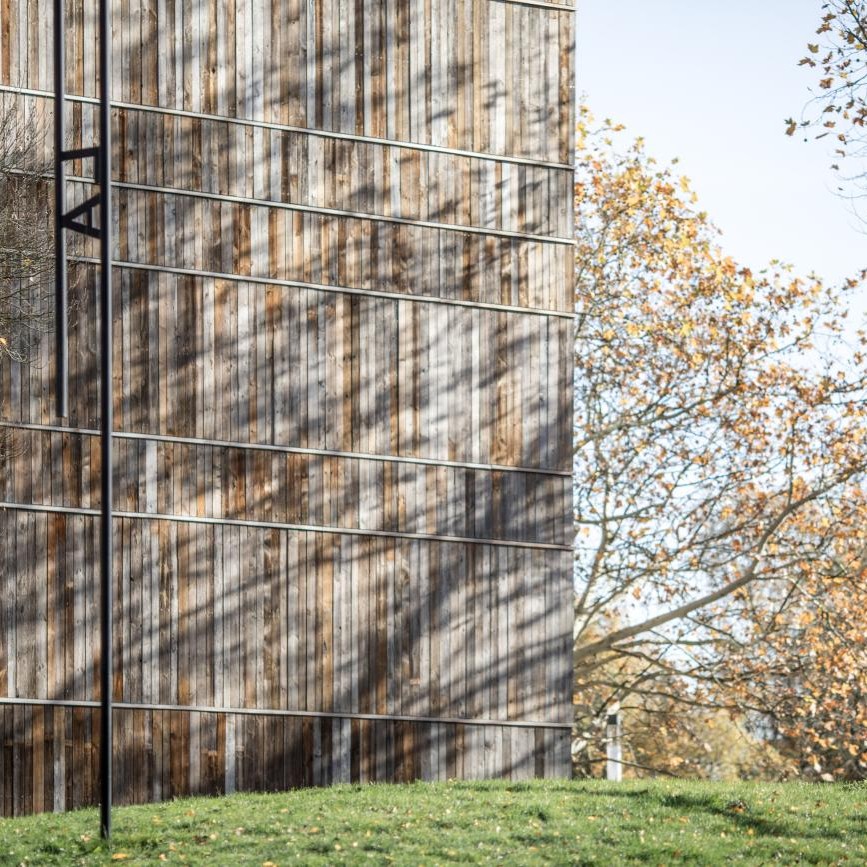
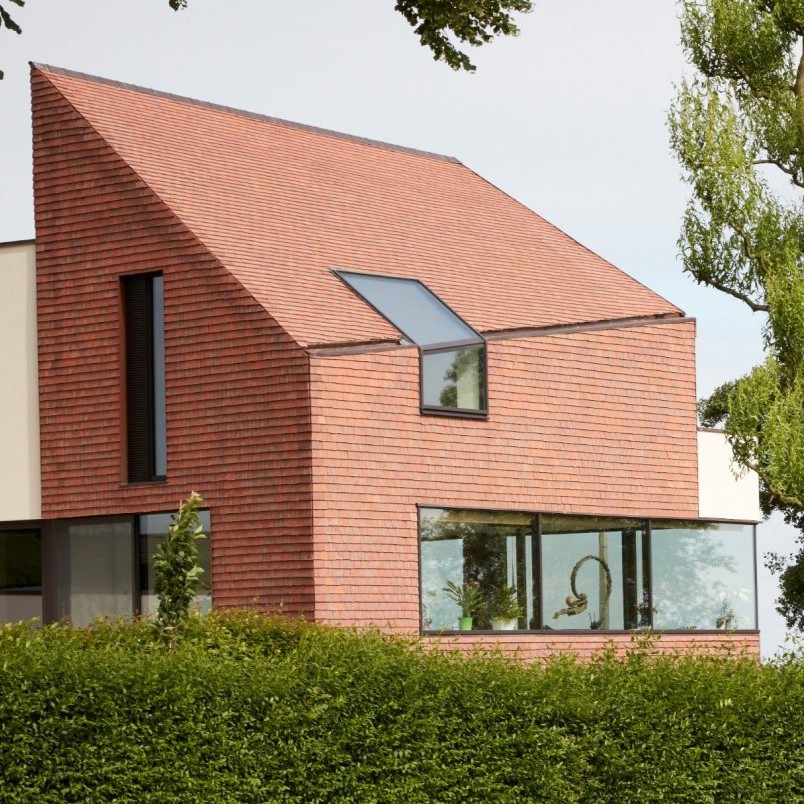
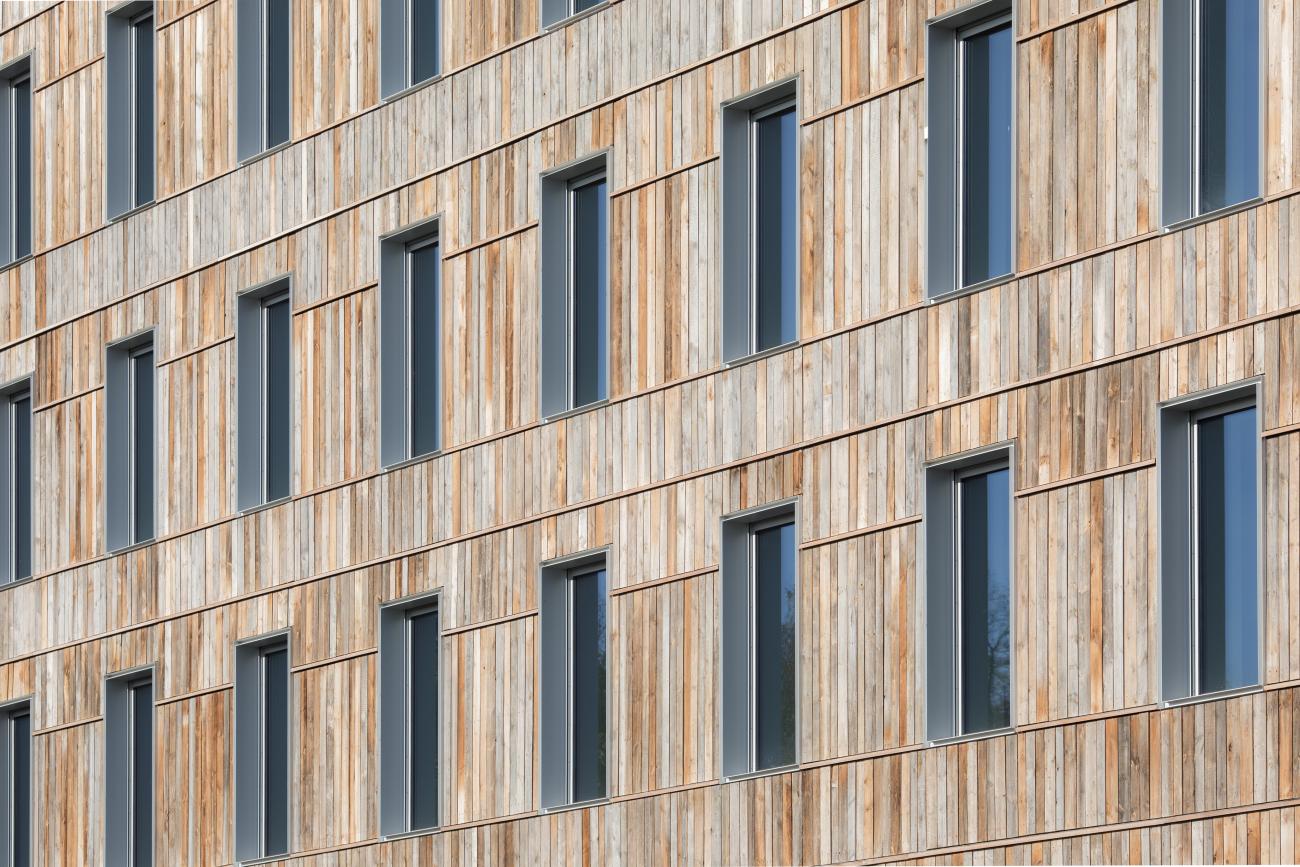
We prioritized the use of bio-sourced materials, reclaimed materials, timber structures, etc., such as reclaimed vertical timber and reddish-brown roof tiles.
This second skin ensures compatibility with the existing structure where the project is located.
Result
Preserved identity
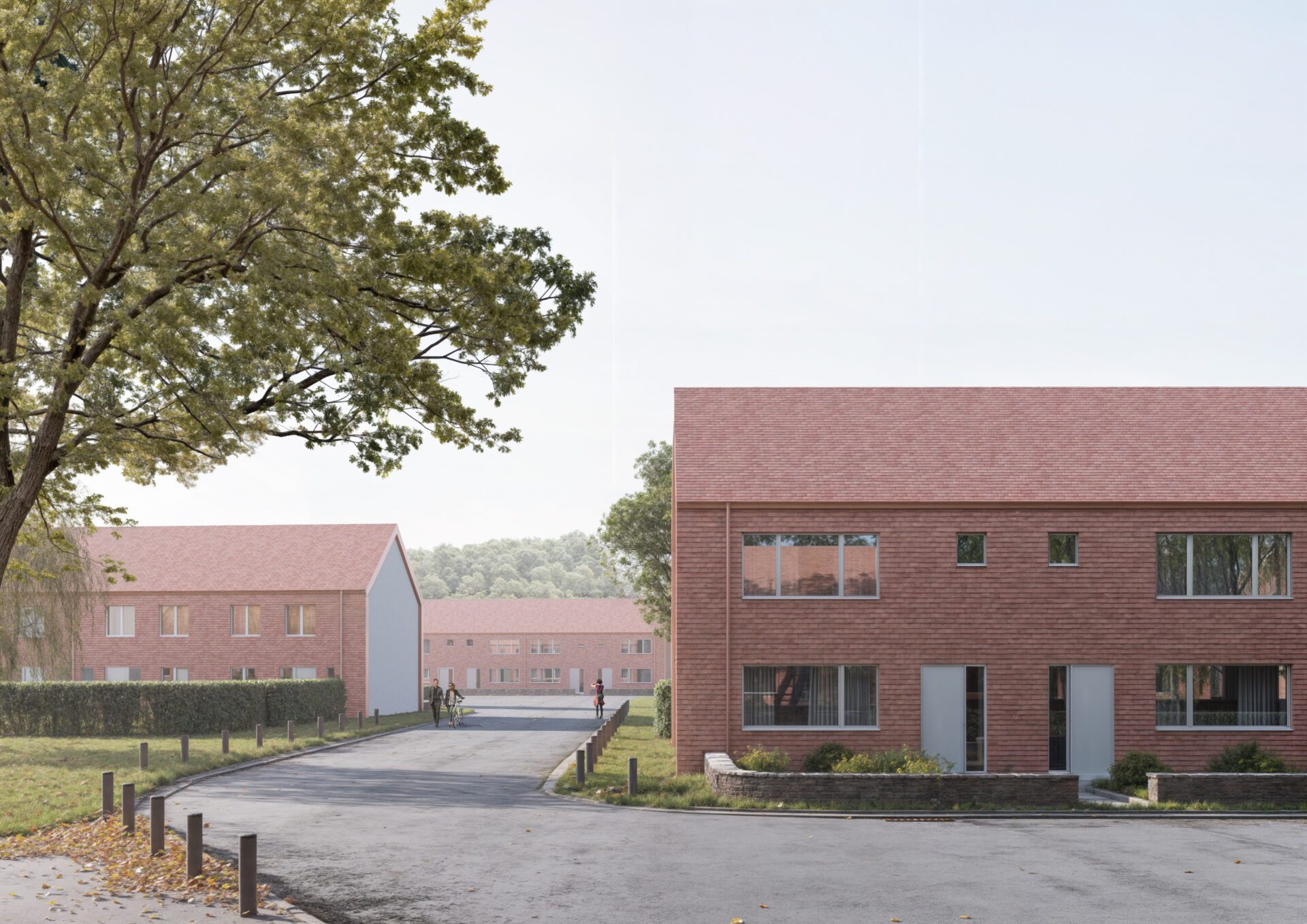
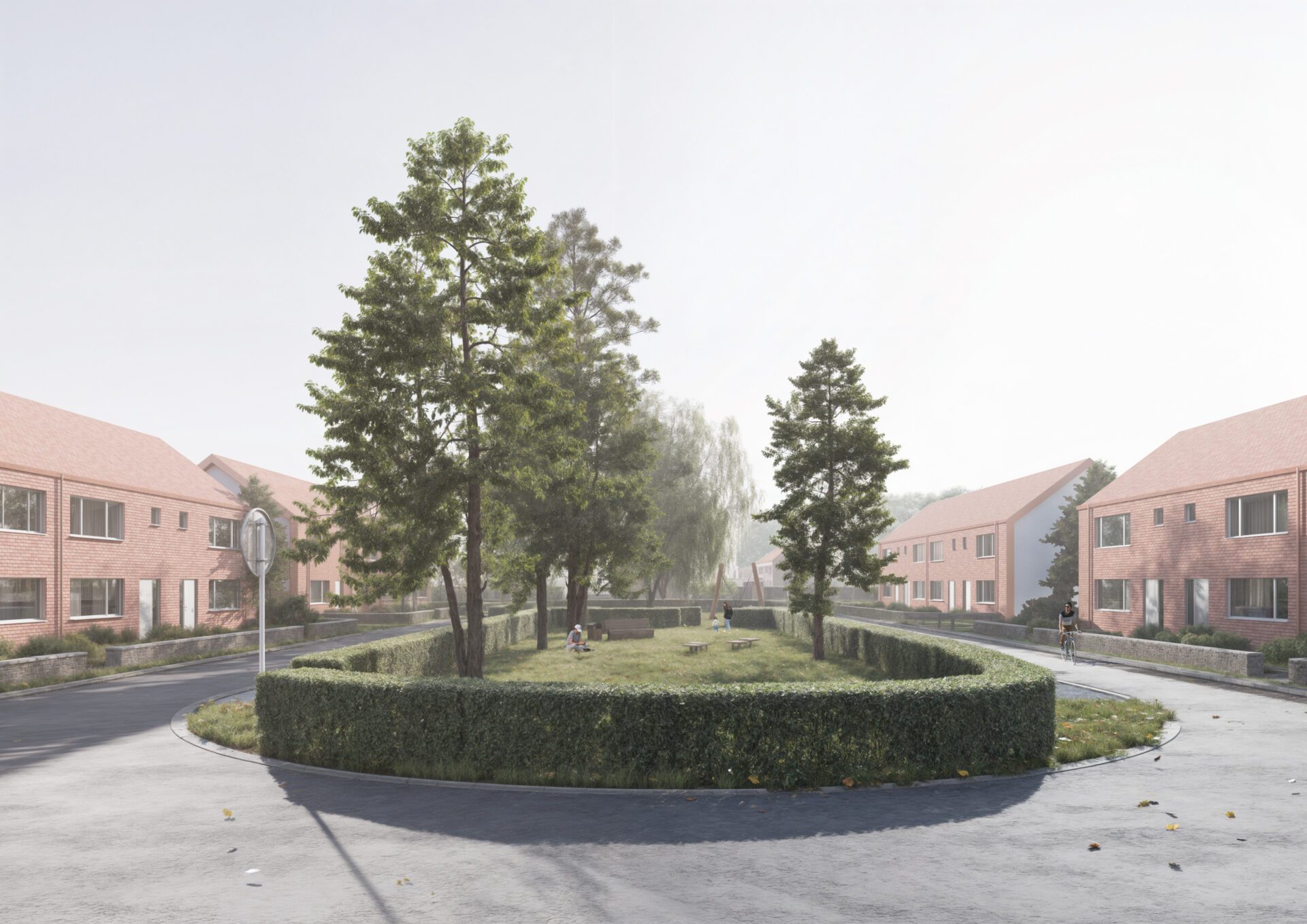
The continuity of the typology is maintained by unifying interventions block by block. This approach helps maintain homogeneity throughout the ensemble while offering quality architecture.
The proposal integrates and directly envelops the existing building. This second skin is designed to provide architectural clarity while incorporating new materials such as cladding and exterior joinery.
As in its original state, the project’s identity is maintained through continuous treatment of the different facades.